
Outreach turns spammy when it is sent to people who have no reason to care, says nothing specific to them, and keeps going after they have stayed silent. The fix is the reverse: contact only people who fit your ideal customer profile (ICP) and show a real buying signal, write one honest and specific reason for reaching out, send from a properly set up domain, follow up a few times, then stop. The rest of this guide shows how, channel by channel.
TL;DR
- Spam is mostly a targeting problem. If the person has no reason to need what you sell, no wording will save the message.
- Personalize with one real, verifiable signal and one honest sentence on why it matters to them. Skip fake flattery and invented familiarity.
- Set up authentication (SPF and DKIM), keep lists clean, and honor opt-outs fast. The FTC says B2B email is covered by CAN-SPAM.
- On LinkedIn, do not pitch in the connection request. Earn relevance first, and respect the platform's rules on unwanted messages.
- Follow up a handful of times with something new each time, then stop.
Table of Contents
- What makes outreach feel spammy
- Start with the list, not the template
- Personalize with substance
- Send it the right way
- Know the rules before you send
- Keep LinkedIn outreach respectful
- Follow up without becoming a pest
- A pre-send checklist
- Our perspective
- How we run outreach that does not read as spam
- FAQ
- Sources
What makes outreach feel spammy
Recipients do not judge outreach by your intent. They judge it by how it lands in an inbox at 9:12 on a Tuesday morning. Four things reliably make it feel like spam.
Wrong person. A message about payroll software sent to a head of engineering is spam, however polite. Relevance is the first filter a reader applies.
Generic copy. If the message could have gone to a thousand people with only the first name swapped, the reader can tell in two lines.
Pressure. Constant emails, pushy calls and mass messaging make a company look desperate. Forbes Agency Council contributors note that B2B buyers tune out this noise and prefer respectful, tailored approaches from vendors who understand their challenges.
Deception. Fake "Re:" subject lines, invented prior conversations, or a claim of a mutual connection that does not exist. These are the fastest way to get reported.

Notice what is not on the list: length, sending cold messages at all, or mentioning your product. Cold outreach to a well-chosen person with a clear, honest reason is a normal part of B2B business. The line between outreach and spam is how well it is aimed and how honestly it is written.
Start with the list, not the template
Most teams try to fix spam perception in the copy. The bigger lever is who gets the message.
Define who should hear from you
Write down the ICP in terms you can check: industry, company size, role, tech stack, funding stage, geography. Then add the reason they might need you now. Without a reason, you have a list of people who match a description, which is how mass mailing begins. If your personas are fuzzy, building buyer personas before you write anything helps you tell which needs and phrases your message should speak to.
Use signals, not just firmographics
A signal is evidence that this person or company may have the problem you solve right now. Examples: a new VP of Sales hire, a funding round, a job post for a role your service replaces, a LinkedIn post about missing pipeline targets, or a visit to your pricing page. Signals narrow a list from "everyone who fits" to "the few who might care this month." That shrinks volume and raises relevance together.
Keep the data fresh
Outdated records produce the most embarrassing messages: congratulating someone on a job they left, or pitching a company that no longer exists. Build a simple routine:
- Verify the role and company on the person's current LinkedIn profile before the first touch.
- Remove anyone who bounced, unsubscribed or replied "not interested," and keep that suppression list permanent.
- Re-verify any contact older than a few months before you re-engage.
- Drop records where you cannot state, in one sentence, why this person is on the list.
That last test is the most useful. If you cannot say why you are writing to someone, the reader will not be able to either.
Personalize with substance
Personalization is not a first-name merge field. It is a specific, true observation connected to a specific reason you are writing. Our guide to AI personalization at scale goes deeper, but the core pattern is short:
- One signal. Something real and recent about them or their company.
- One relevance line. Why that signal connects to a problem you help with.
- One small ask. A question or a short call, not a 30-minute demo.
Here is the difference in practice.
| Spammy | Better |
|---|---|
| "Hi Sam, I came across your company and was impressed by your growth. We help companies like yours 10x pipeline." | "Hi Sam, saw you opened two SDR roles last month. If hiring is slow, we run outbound for Series A teams while you recruit. Worth a quick look?" |
| "Quick question" (no question follows) | A subject line that states the topic plainly |
| Claims of guaranteed results | One specific, believable outcome and how it works |
Two rules keep personalization honest. First, never overpromise. Buyers are skeptical, and Forbes Agency Council member Ellie Victor suggests pressure-testing your message by researching, testing different wording and asking prospects how they would phrase it. Second, never fake familiarity. If a line only works because the reader believes you know them, and you do not, cut it.
A clear structure helps too. If you write call or message scripts, a B2B sales script structure gives you an opening, a reason and an ask, so you are not improvising pressure.
AI can help with the research and the first draft, but a person should read what goes out. Our post on LinkedIn outreach personalization covers the one-signal, human-review approach we use.
Send it the right way
Even a relevant message can be treated as spam by the mailbox provider before a human sees it. Deliverability basics are not optional.
- Authenticate your domain. Sinch, an email delivery provider, says missing DKIM or SPF is its top spam-filter risk and requires both for its service. Your email or domain admin can set these records up.
- Use a real sender. A named person with a company address and a plain signature reads as a colleague. A no-reply address or a vague brand name reads as a campaign.
- Write subject lines that tell the truth. The FTC's rules prohibit deceptive subject lines, and readers punish them anyway.
- Keep the body plain. Short text, few or no images, and at most one link. Heavy formatting looks like marketing.
- Ramp volume gradually and cap it. A new domain that suddenly sends hundreds of messages looks like a spammer. Low, steady volume to well-targeted contacts protects your reputation.
- Clean the list continuously. Remove bounces at once. Stop sending to anyone who has never opened or answered after your sequence ends.
Know the rules before you send
This part is about compliance. Rules differ by country, so check the law for each market you contact. For the United States:
- The FTC's CAN-SPAM compliance guide states that the law covers all commercial email and makes no exception for business-to-business messages.
- The same guide requires accurate header information, non-deceptive subject lines, a clear disclosure that the message is an ad, and a valid physical postal address.
- It also requires a clear way to opt out, and says opt-outs must be honored within 10 business days. Do it faster. Treat a reply of "remove me" as an opt-out, even if it is not a click on a link.
CAN-SPAM does not require prior consent for commercial email, which is why US cold email is legal when done correctly. Other markets, such as Canada, the EU and the UK, have different consent rules, and they can treat individuals and companies differently. If you contact people outside the US, confirm the local rules with counsel or the national regulator before you start. Our post on two legal tests for cold email compliance gives a practical pre-send check.
Keep LinkedIn outreach respectful
LinkedIn is where many B2B conversations start, and also where spam is most visible, because your name and face are attached to it.
Read the platform's rules. LinkedIn's Professional Community Policies say that violations can lead to limited visibility of content or removal, and that repeated or egregious offenses lead to account restriction. Spam, including unwanted or repetitive promotional messaging, is the kind of behavior they target. Reread the current text before you launch a campaign, since policies change.
Do not pitch in the connection request. Use it to establish relevance: a shared topic, a post of theirs you engaged with, or a stated reason that is not a sales pitch. Pitch only after they accept, and only if the fit is real.
Do not run unsafe automation. Tools that scrape, mass-message or simulate human behavior can put your account at risk. We explain the line in what is and is not allowed in LinkedIn automation.
Keep the message short and human. Two or three sentences, one signal, one question. Our write-up on personalized LinkedIn messaging shows how specific openers lift replies.

Follow up without becoming a pest
Most replies come after the first message, so silence after one email is rarely a no. But there is a point where persistence turns into harassment.
A workable pattern for cold email:
- Send the first message.
- Follow up a few days later with a new angle, such as a relevant example, a short question or a useful resource, not "just bumping this."
- Space the next touches further apart, over about two to three weeks in total.
- Make the same clear ask no more than twice, then stop.
- Add the contact to a long-term pause. Come back only when a new, real signal appears.
A recent cadence guide from OfficeAgent suggests three to four follow-ups spaced several days apart before stopping, which matches the shape above. If you mix email, LinkedIn and calls, count every touch across channels. Five emails, three LinkedIn nudges and two calls to the same person in two weeks is a lot, even when each looks reasonable alone. For multi-channel examples, see our sales follow-up cadence and cadence examples.
When someone says no, thank them, record it, and stop. A polite exit leaves a better impression than another follow-up.
A pre-send checklist
Run every campaign through these questions before it goes out:
| Check | Pass condition |
|---|---|
| Relevance | You can state in one sentence why each person is on the list |
| Data | Role and company verified recently; bounces and opt-outs removed |
| Personalization | One true, specific signal per message |
| Claims | Nothing you cannot back up; no invented urgency |
| Subject line | Matches the body |
| Authentication | SPF and DKIM set up on the sending domain |
| Compliance | Opt-out, postal address and ad disclosure included where required |
| Cadence | A defined end, with a stop after a clear non-response |
| Channel rules | LinkedIn and email provider policies reviewed |
Our perspective
We built SDR.ai around one belief: spammy outreach is a design flaw, not a tone problem. When a team sends 5,000 generic messages hoping 1% bite, the system is rewarding volume and punishing the buyer. We would rather send fewer messages to the right people.
That is why our approach starts with the ICP and intent signals, runs LinkedIn-first, and puts a human SDR on every reply. Signals decide who gets contacted and when. Personalization is one real reason, reviewed by a person. Follow-up happens across channels on a plan with an end point, so nobody is chased forever.
The practical benefit for a founder or sales leader is that you get the pipeline math without building an SDR team in-house, and without turning your brand into the sender everyone mutes. Our own claim is that this kind of focused outreach builds real conversations, where cold blasting only builds a complaint list.
Chad
How we run outreach that does not read as spam
If you want the above done for you, our AI-Powered Outbound service is a done-for-you sales development engagement: LinkedIn-first outreach to your ICP, intent-based lead identification, and follow-up across channels, with a human SDR handling every reply. It is $2,500 per month plus a one-off $500 setup fee.
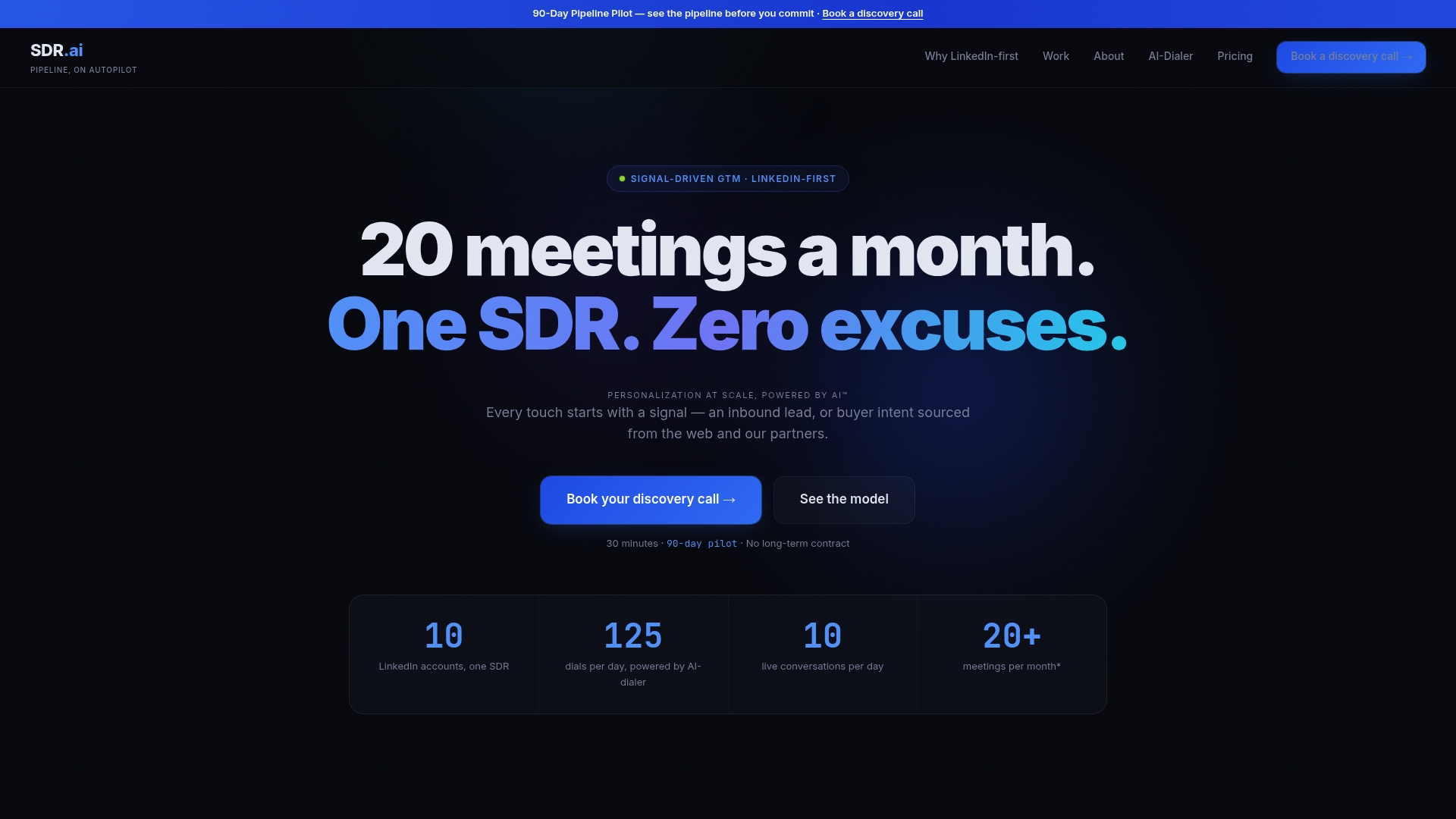
If you prefer to run outbound yourself, The SDR.ai Blueprint is our playbook for building your own engine, and our AI-Dialer is available at $2,400 per year with a one-off $500 onboarding fee. You can also see how an AI SDR works in plain English.
FAQ
Is cold outreach the same as spam?
No. Cold outreach is a first contact with someone you have not spoken to before. It becomes spam when it is irrelevant, deceptive, or repeated after the person has made clear they are not interested. A targeted, honest message with a clear opt-out is ordinary business communication.
Is cold email to businesses legal in the US?
Yes, if you follow CAN-SPAM. The FTC says the law has no exception for business-to-business email, so you need accurate headers, honest subject lines, an ad disclosure, a postal address and a working opt-out. Other countries have different consent rules, so check them before you send abroad.
How many follow-ups are too many?
There is no universal number, but a defined end matters more than the count. A common pattern is three to four follow-ups over a few weeks, each adding something new, then a stop. If the person asks you to stop at any point, stop immediately.
Can I use AI to write outreach without sounding like spam?
Yes, if AI handles research and drafting and a person reviews each message for accuracy and tone. Spam comes from sending unverified claims and generic text at volume, whoever or whatever wrote it. Keep one verified signal and one honest ask in every message.
What should I do when someone marks my message as spam?
Remove them from every list and sequence at once, and review who else on the list resembles them. A complaint is a signal about targeting or wording. Adjust the list or the copy before your next send.
Sources
- How To Keep B2B Outreach From Being Spammy (Forbes Agency Council)
- CAN-SPAM Act: A Compliance Guide for Business (FTC)
- LinkedIn Professional Community Policies
- Sinch E-Mail 365 Deliverability Best Practices Guide
- How Many Follow Up Emails to Send (OfficeAgent)
- How to create buyer personas for targeted marketing success
- Guion de ventas B2B: estructura, ejemplos y cómo usarlo