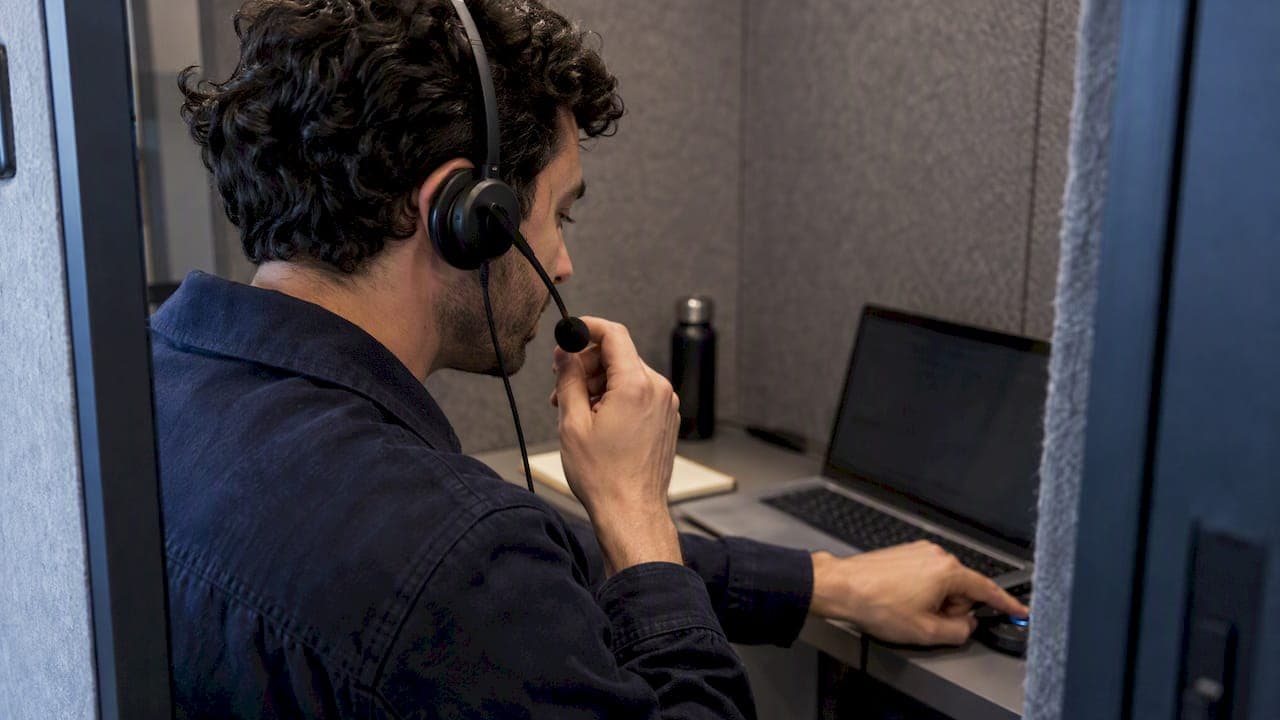
A voicemail drop works best as a short, curiosity-building setup that points the recipient toward a follow-up email, not as a standalone pitch or a request for a callback. Limit drops to one or two per contact, send the email within about five minutes, and let the voicemail do its real job: making that email worth opening.
TL;DR:
- Gong Labs found that one or two drops raised email reply rates from 2.73% to 5.87%, while three or more lowered them to 2.2%.
- Repeated calls from the same number can reduce future connection rates, so rotate caller IDs and record each drop and outcome in the CRM.
- Run a test for two to four weeks, comparing sequences with and without drops while keeping email timing and subject lines identical.
- For high value accounts, consider a personalized live message when the account’s importance outweighs automation’s efficiency.
- Ringless voicemail to wireless numbers may trigger TCPA consent and opt out requirements, so document permission and have counsel review campaigns before scaling.
Table of Contents
- What Is a Voicemail Drop, and What Are the Common Types?
- How Voicemail Drops Fit Into a Dialing Workflow
- What the Data Says About Benefits and Limits
- The Playbook: Timing, Cadence, and a Test Checklist Before You Scale
- Six Voicemail Scripts You Can Record Today
- How to Measure Results and Know What's Working
- Compliance Comes First With Ringless Voicemail
- A Manager's Take on Making This Work
- Scaling Voicemail-Led Outreach Without Building an Ops Team
- FAQ
- Sources
What Is a Voicemail Drop, and What Are the Common Types?
A voicemail drop is a prerecorded message a dialer delivers automatically once it detects a prospect's voicemail greeting, instead of a rep leaving a message live on every call. That single difference, automation versus a rep speaking in real time, is what separates a drop from a manual leave.
Dialers trigger drops in a few ways, often leveraging advanced features described in Answering Machine Detection APIs and Webhooks for Dialers:
- Beep detection: the system waits for the greeting's beep, then plays the message.
- Silence detection: the system detects a pause after the greeting ends and drops the message.
- Manual selection: a rep hears the greeting and clicks to drop a prerecorded message instead of talking live.
Ringless voicemail, a related but distinct technique, delivers a message directly to voicemail without ringing the phone at all. Standardizing these terms across a sales team avoids confusion when reviewing call logs or building sequences.
How Voicemail Drops Fit Into a Dialing Workflow
Voicemail drops only work when they're wired into the broader calling and sequencing process, not treated as a one-off feature.
- Call attempt: the dialer places the call as part of a sequence or list.
- Detection: beep, silence, or manual cues identify that the call reached voicemail.
- Message selection: the system pulls the right drop from a message library based on sequence step, persona, or campaign.
- Drop and logging: the message plays, and the attempt, outcome, and message used get logged to the CRM for attribution.
Integration points matter here. Message libraries need version control so reps know which script is live. Number rotation and dialer integration with CRM keep attribution clean when a rep works the same list across days. Parallel dialing, which lets a system work multiple numbers at once, changes the math on how many drops a rep can deliver per hour, which is worth understanding before scaling volume through a power dialer.
A live leave still beats a drop when the account is high value enough that a personalized, in-the-moment message outweighs the efficiency of automation.
What the Data Says About Benefits and Limits
Voicemail drops don't close deals on their own. Their real value is priming the next touch.
- Leaving one or two voicemails lifts the email reply rate that follows, according to Gong Labs' analysis of over 300 million cold calls.
- Leaving three or more voicemails to the same contact reverses that lift and drags reply rates back down.
- Repeated voicemails to the same number can also reduce future connect rates, so number rotation matters.
Leaving one or two voicemails raises email reply rates from 2.73% to 5.87%, according to Gong Labs, while three or more drops pull the reply rate down to 2.2%. That's the core argument for capping drops at two: more isn't better, it's actively worse.
Practical guardrails follow directly from that data: cap every contact at two drops, rotate the numbers you dial from, and make sure the follow-up email actually goes out on schedule instead of sitting in a queue.

The Playbook: Timing, Cadence, and a Test Checklist Before You Scale
Treat every voicemail as a setup line, not a pitch. The goal is curiosity, not persuasion, because the real conversion happens in the email that follows.
- Keep it short. Fifteen to thirty seconds is the target window, consistent with HubSpot's sales voicemail guidance recommending 20 to 30 second messages that lead with relevance.
- Send the email within five minutes. The voicemail should reference that an email is coming, and the email should actually arrive while the voicemail is still fresh in the prospect's mind.
- Pick your calling windows. Late morning and mid-afternoon tend to produce more live connects, which also means more chances to decide between a live leave and a drop in the moment.
- Use the double-tap pattern. A short first drop establishes context, and a slightly longer second drop a few days later adds a specific reason to respond, such as a relevant result or detail.
- Rotate numbers and A/B test. Try different openers, different lengths, and different email subject lines tied to each script, then compare reply rates across variants.
- Run the delivery checklist before scaling. Confirm the message delivers cleanly across major carriers, check that voicemail transcription displays your callback number correctly, and tag every drop in the CRM so attribution holds up later.
Pro Tip: Record the same script on two different phone models and listen to the transcription output. Carriers handle voicemail-to-text differently, and a garbled number in the transcript can quietly kill your callback rate.
Six Voicemail Scripts You Can Record Today
These are built for the fill-in-the-blank reality of daily dialing. Swap in the prospect's name, company, and relevant detail before recording.
- First drop, 15 seconds: "Hi [Name], this is [Rep] from [Company]. I'll keep this short. I'm sending you an email right after this with something specific to [Company/role]. Watch for it from [email]."
- Second drop, 30 seconds: "Hi [Name], [Rep] again from [Company]. I know you're busy, so I'll make this quick. I just sent a follow-up email with [specific detail or result]. If it's not relevant, no worries, just let me know."
- ABM cold touch: "Hi [Name], [Rep] from [Company]. We work with a few teams in [industry] on [specific problem]. Sending a short email your way now with the details."
- Inbound follow-up: "Hi [Name], thanks for checking out [resource/demo]. This is [Rep] from [Company]. I'm sending a quick email with next steps, keep an eye out."
- Missed meeting: "Hi [Name], sorry we missed each other. This is [Rep] from [Company]. I'm sending over a couple of times that work on my end by email right now."
- Referral touch: "Hi [Name], [Rep] from [Company]. [Referrer] suggested I reach out. Sending a short email in just a moment with the context."
Every script ends the same way: state your phone number clearly, and tell the prospect an email is coming.
How to Measure Results and Know What's Working
The right metrics for voicemail drops aren't callback counts. They're what happens downstream.
- Email reply rate after a drop versus email alone, which is the clearest signal of whether the voicemail primed the channel that matters.
- Callback rate, tracked but weighted lightly since it's a secondary outcome.
- Connect rate on future calls, to watch for the drop in reachability that repeated drops can cause.
- Sequences-to-meeting, which ties the whole cadence back to pipeline rather than a single touch.
Leaving one or two voicemails lifts email reply rates from a baseline of 2.73% to 5.87%, according to Gong Labs, which makes that range a reasonable benchmark for your own test results.
Build an A/B test with a fixed window, usually two to four weeks, comparing drop versus no-drop sequences with identical email timing and subject lines so the voicemail is the only variable. Tag every drop and its outcome in the CRM, and resist changing more than one variable per test cycle.
Compliance Comes First With Ringless Voicemail
Ringless voicemail delivery to wireless numbers can fall under the TCPA, according to the FCC's declaratory ruling, which means prior express consent and clear opt-out options may be required before you run a ringless campaign. Document consent for every contact, make opt-out instructions easy to find, and have counsel review your ringless workflow before scaling it. Standard dialer-triggered drops during live outbound calling sit in different legal territory, but the ringless variant deserves its own compliance check.
A Manager's Take on Making This Work
The teams that get real lift from voicemail drops treat them as a measurement problem first and a messaging problem second. Start with a small pilot, log everything in the CRM, cap drops at two, and only scale once the email-reply data backs it up. Dialer integrations that handle rotation and parallel calling make that ramp faster once the playbook proves out.
— Chad
Scaling Voicemail-Led Outreach Without Building an Ops Team
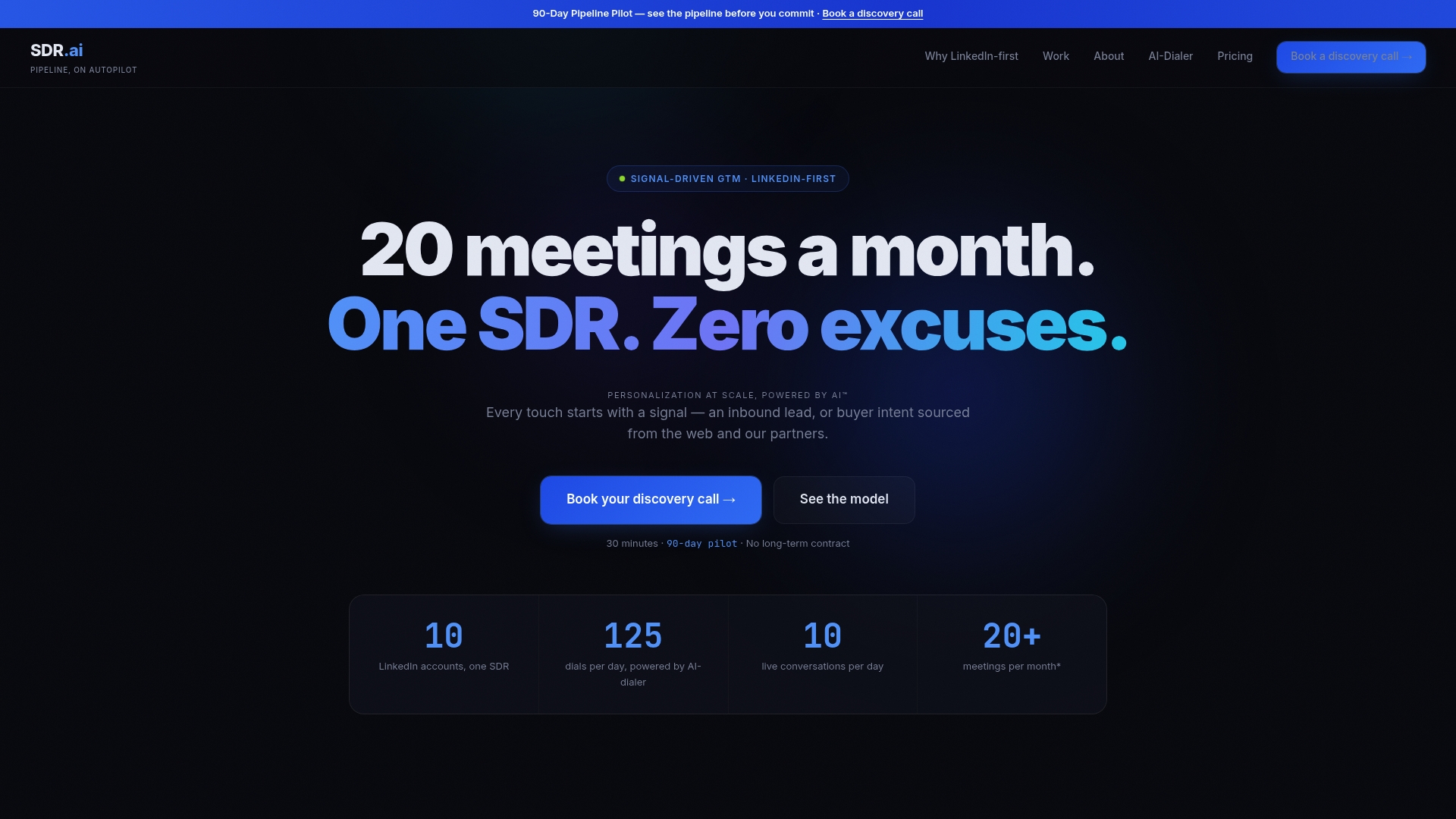
We built our approach around the same principle this playbook follows: voicemail drops work when they're one coordinated step in a sequence, not a tactic running on its own. Our AI-Dialer handles parallel dialing and number rotation so reps can run disciplined drop cadences at volume, while our LinkedIn-first targeting keeps every touch focused on actual intent signals instead of a cold list. Clients running our AI-Powered Outbound service see this cadence tied directly to booked meetings, with a human SDR handling every reply.
If you want the dialer piece on its own, our AI-Dialer plan runs $2,400 per year with a one-time $500 onboarding fee. For teams that want to see the full model first, book a demo and we'll walk through how the sequencing, dialing, and measurement fit together.
FAQ
What are some good voicemail drop ideas?
Good voicemail drops stay short, fifteen to thirty seconds, and point the recipient to an email instead of asking for a callback. The strongest ideas reference something specific to the prospect's role or company and mention that a follow-up email is coming within minutes, consistent with HubSpot's sales voicemail guidance.
Is voicemail drop illegal?
Standard voicemail drops delivered during live outbound dialing generally follow the same rules as any sales call. Ringless voicemail is different: it can fall under the TCPA according to the FCC, which means consent and opt-out requirements may apply before you run that kind of campaign.
What happens if you dial *86?
The code used to opt out of certain ringless voicemail or robocall services varies by carrier and country, so check with your carrier directly rather than assuming the code behaves the same way everywhere.
Do voicemail drops actually work?
Voicemail drops work best as a primer for email rather than a tactic that stands alone. Leaving one or two drops raises email reply rates from 2.73% to 5.87%, according to Gong Labs' analysis of 300 million calls, while three or more drops push reply rates back down to 2.2%.
Sources
- Should you leave voicemails when cold calling? Here’s what the data says — Gong Labs
- FCC 22-85: Rules and Regulations Implementing the Telephone Consumer Protection Act of 1991 (ringless voicemail ruling)
- 19 tips to leave the perfect sales voicemail — HubSpot