
AI sales outreach works best when it runs research first, writes second, and sends last, with a human reviewing anything that touches a prospect's inbox or DMs. Done this way, teams get faster prioritization and more qualified meetings booked without wrecking domain reputation. Skip the research step and you get hallucinated details, tanked deliverability, and reps who stop trusting the tool.
TL;DR:
- Research-first AI outreach reduces deliverability issues and improves reply rates by ensuring messages reference verified and recent prospect data.
- Using AI copilots or autonomous agents without prior research increases the risk of sending irrelevant or incorrect messages, damaging domain reputation.
- Proper setup of authentication protocols and domain separation, along with strict monitoring of bounce and complaint rates, is critical to maintaining inbox placement.
- Conducting controlled pilots on narrow segments with clear baseline metrics helps validate AI workflows without harming domain reputation or data quality.
- Focusing on signal-driven outreach channels like LinkedIn, with human review of replies, yields higher engagement and more qualified meetings.
Table of Contents
- What AI Sales Outreach Actually Means
- Why Research-First Sequencing Actually Works
- What AI Outreach Actually Delivers, and Where It Breaks
- Deliverability, Inbox Signals, and the Safety Checklist Nobody Skips Twice
- How to Evaluate an AI Outreach Vendor Without Getting Sold a Demo
- Running a Pilot Without Torching Your Domain Reputation
- Measuring What Actually Matters: KPIs and Benchmarks
- A LinkedIn-First, Human-Centered Method in Practice
- How Sdr Turns Research-First Outreach Into Booked Meetings
- Sources
- FAQ
What AI Sales Outreach Actually Means
AI sales outreach is the use of machine learning models to source prospects, research their business context, personalize messaging, and manage send timing across email, LinkedIn, and phone. That's the plain definition. The harder part is knowing which category of tool you're actually buying, because vendors blur the lines constantly.
Three distinct categories dominate the market right now, and confusing them is the single most common buying mistake.
- AI copilots sit inside a human workflow. They draft a message, suggest a subject line, or summarize a call, but a rep still decides what gets sent and to whom.
- Autonomous AI SDRs or agents run the full loop with minimal human touch: they find contacts, write copy, and send sequences on a schedule, often across thousands of leads at once.
- Research-first platforms slow the process down deliberately. They pull verified account and contact data, score it against intent signals, and only then hand off to a writing step that's constrained by facts the system actually confirmed.
The taxonomy matters because each model fails differently. Copilots waste time if your reps are already slow writers. Autonomous agents scale fast but amplify bad data at scale, since a wrong title or defunct company shows up in a thousand messages instead of one. Research-first systems trade raw speed for accuracy, which is why Clay's guide to AI lead generation frames fit and intent scoring as the step that separates qualified outreach from mass template sends. If you're comparing tools without first asking which category you're looking at, you're comparing apples to a spreadsheet.
Why Research-First Sequencing Actually Works
The workflow sounds obvious once you say it out loud: research, then write, then send. Almost no team follows it strictly, which is exactly why it works when you do.
Here's the sequence broken into responsibilities:
- Research pulls verified firmographic and contact data, plus intent signals like job changes, funding events, or LinkedIn activity. This step is entirely fact gathering, no writing yet.
- Write takes only the verified facts from step one and drafts a message. The AI is explicitly constrained to reference what was confirmed, not what it assumes.
- Send applies timing, sequencing logic, and channel choice (LinkedIn message, email, or a warm call) based on where the prospect is most active.
- Review puts a human in front of any reply before the next message goes out, especially in the first few sequences with a new segment.
Constraining the AI to verified research is what prevents hallucination. A language model asked to "write a personalized opener for a VP of Sales at a Series B fintech" will invent plausible details if none are supplied. Give it a confirmed data point, like a recent funding round or a specific LinkedIn post the prospect wrote, and it has something real to reference instead of guessing.
This is also where reply rates diverge sharply. Signal-triggered LinkedIn campaigns, targeting people who visited a profile or engaged with a post, produce reply rates around 13 to 14%, compared to a 10.3% average for generic DM outreach. That gap exists because the message references something true and recent, not because the copy is cleverer.
Pro Tip: Build a "none found" rule into your research step. If a data point can't be verified through at least two sources, the field stays blank rather than getting filled with a guess. A blank field is an honest gap. A guessed field is a landmine.
What AI Outreach Actually Delivers, and Where It Breaks
The upside is real, but it's narrower than most vendor pitches suggest. AI outreach genuinely speeds up prospecting, scores accounts faster than a rep could manually, and drafts a personalized first line in seconds instead of the ten minutes a good rep would spend researching one account.
The realistic benefits look like this:
- Faster prioritization of which accounts to work first, based on intent signals rather than a flat list.
- Higher volume of researched, first-line-personalized outreach than a human team could produce alone.
- Consistent follow-up cadence that doesn't depend on a rep remembering to send message four of six.
- Faster ramp for new reps, since the research step does work that used to take months to learn.
Now the failure modes, and they're just as common as the wins.
Wrong ICP definition is the most expensive mistake, because AI will happily research and message the wrong audience with total confidence. Bad or stale contact data compounds fast when it's sent at scale instead of caught by one rep noticing a bounce. Deliverability collapse happens when volume ramps faster than domain reputation can support. And platform limits are real. LinkedIn throttles accounts that message too aggressively, and email providers increasingly flag anything that reads like a template.
About 70% of sales teams now use AI to write outbound email, and interestingly, the teams relying on it least often report an easier time getting replies. That's not an argument against AI, it's an argument against using it to skip the research step it was supposed to support.
Mitigation is mostly about pacing. Start with a narrow ICP, cap volume until reply and bounce data confirm the messaging works, and pause a segment the moment complaint rates tick up rather than waiting for a full campaign to finish.
Deliverability, Inbox Signals, and the Safety Checklist Nobody Skips Twice
Deliverability is now the single biggest constraint on B2B outbound, tighter in 2026 than it's been in years, largely because AI-generated volume triggered more aggressive spam heuristics across every major provider. This isn't a minor technical footnote. It's the difference between a campaign that books meetings and one that quietly vanishes into spam folders while your dashboard still shows "sent."
Three authentication protocols form the baseline, and skipping any one of them is a decision to fail slowly.
- SPF tells receiving servers which mail servers are allowed to send on your domain's behalf.
- DKIM signs your emails cryptographically so providers can confirm the message wasn't altered in transit.
- DMARC tells providers what to do when SPF or DKIM checks fail, and gives you visibility into spoofing attempts.
Domain separation is the second pillar. Cold outreach infrastructure needs to sit apart from your marketing and transactional sending domains, so a reputation hit on one doesn't drag down the other. Warm-up matters just as much: a new domain or mailbox needs a gradual ramp, typically starting at low daily volume and increasing over several weeks, before it can handle full outreach load.
Here's what to monitor and the thresholds that actually matter:
| Signal | Healthy Range | Why It Matters |
|---|---|---|
| Bounce rate | Under 2% | High bounces signal bad list hygiene to providers |
| Spam complaint rate | Under 0.1% | Complaints are the fastest way to torch domain reputation |
| Inbox placement | Track weekly via seed testing | Confirms mail is landing in the inbox, not spam or promotions |
| Reply rate | Segment-dependent, track your own baseline | Engagement is now a primary signal providers use to rank senders |
Those bounce and complaint thresholds come from an analysis of more than 53 million cold emails, and they hold up as a reasonable floor regardless of your industry. Mailbox providers have also started weighting engagement more heavily than raw send volume when deciding inbox placement, according to Validity's 2026 benchmark data, which means a smaller list of people who actually reply will outperform a bigger list that mostly ignores you. Separating your sending infrastructure and authenticating every domain you use, as recommended in Geysera's 2026 deliverability breakdown, remains one of the highest-leverage technical fixes available before you even touch messaging.
How to Evaluate an AI Outreach Vendor Without Getting Sold a Demo
Most demos are built to hide the parts that matter. The questions below are designed to surface them anyway.
Start with the criteria that actually predict whether a tool will work for your team, not whether the sales rep is good at their job.
- Data sourcing: Where do contact and firmographic records come from, and how are they refreshed?
- Verification: Does the platform confirm contact details through multiple sources before outreach, or trust one provider blindly?
- Research depth: Can the tool surface intent signals like funding, hiring, or content engagement, or does it just pull a title and company name?
- Integration: Does it connect cleanly to your CRM and existing sequencing tools, or does it require a parallel workflow?
- Deliverability support: Does the vendor help with domain setup, warm-up, and monitoring, or leave that entirely to you?
- Human-in-loop control: Can a rep review and edit before send, or is the loop fully automated with no gate?
Review signals across buyer platforms like G2 consistently show these six factors, especially verified contact accuracy and deliverability support, as the ones that separate satisfied buyers from churned ones.
In a demo or pilot, ask these directly:
- "Show me a contact your system couldn't verify. What happens to that record?"
- "What's your average bounce rate across active customer accounts?"
- "Can I see a message your AI drafted without any human edit?"
- "How does pricing change if I add a second sending domain or a phone channel?"
- "What's the ramp time before you'd recommend full volume?"
A vendor that answers the first question with "we don't really see failures" is telling you they don't have a verification waterfall, which means you should expect hallucinated contact data sooner or later.
On pricing, expect one of three shapes: a flat monthly platform fee regardless of volume, a per-contact or per-credit model that scales with usage, or a managed-service retainer that bundles the platform with a human team running it. Each implies a different operational burden. Flat-fee platforms put the verification and review workload on your own team. Per-credit models punish sloppy list building directly in the invoice. Managed retainers shift the workload to the vendor but require trusting their process, which is exactly why the six criteria above matter before you sign anything.
Running a Pilot Without Torching Your Domain Reputation
A pilot's job is to prove the workflow, not to prove volume. Most teams get this backwards and end up with a burned domain and no clean data to learn from.
- Pick one narrow ICP segment. Not "mid-market SaaS," but something specific enough that a rep could name ten target accounts from memory. Narrow segments make it obvious fast whether the messaging is landing or missing.
- Set a baseline before you touch AI. Pull your last 90 days of manual outreach performance on a comparable segment: reply rate, meetings booked, bounce rate. Without this, you have no way to know if AI actually improved anything.
- Cap volume deliberately. Start at a fraction of what the platform can technically handle, often a few dozen contacts a day per sending identity, and let domain warm-up finish before scaling.
- Build the verification waterfall. Route every contact through at least two verification sources before it reaches the writing step. Anything that comes back unverified gets flagged, not guessed.
- Set human review rules explicitly. Decide in advance which message types require a rep's eyes before sending: first touches to a new segment always do, follow-up nudges on an already-approved sequence might not.
- Authenticate every sending domain before day one. SPF, DKIM, and DMARC need to be live and tested, not "in progress," before any message goes out.
- Run the pilot for a fixed window, not an open-ended trial. Four to six weeks is usually enough to see reply patterns and bounce trends stabilize.
- Compare against your baseline honestly. If reply rate matches your manual number but volume tripled, that's a real win. If reply rate dropped by half, the AI didn't fail, your data or targeting probably did.
Pro Tip: Run your pilot on a segment your best rep already knows well. If the AI's research surfaces something that rep didn't already know, you've found genuine signal. If it just restates what's on the company's homepage, the research layer isn't adding anything yet.
Scale triggers should be metric-based, not calendar-based. Guardrails matter just as much on the way up: every volume increase should come with a corresponding increase in human review capacity, since more sends mean more replies that need a real person on the other end, not another automated message.
Measuring What Actually Matters: KPIs and Benchmarks
Meetings booked is the metric that matters to leadership, but it's a lagging indicator. Track the ones that predict it earlier.
The core KPI set for any AI-driven outreach program:
- Qualified meetings booked against your ICP definition, not just any accepted call.
- Reply rate, segmented by channel and by whether the message was signal-triggered or generic.
- Inbox placement, checked through seed testing rather than assumed from send confirmations.
- Spam complaint rate, watched weekly, not monthly, since it can spike fast.
- Bounce rate, the earliest warning sign that your data quality has slipped.
Benchmarks differ meaningfully by channel. Signal-driven LinkedIn outreach targeting profile visitors or post engagers runs 13 to 14% reply rates against a 10.3% average for generic LinkedIn DMs. Cold email needs tighter guardrails: bounce under 2%, complaints under 0.1%, as Saleshandy's analysis of 53 million emails confirms.
For experiment design, change one variable at a time. If reply rate drops after a messaging change, you'll know exactly what caused it instead of guessing between five variables you altered simultaneously. Iterate when a metric moves gradually in the wrong direction over two or three cycles. Pause immediately when spam complaints spike or bounce rate jumps sharply in a single week. That's not a trend to iterate on, it's a signal to stop sending until you know why.
A LinkedIn-First, Human-Centered Method in Practice
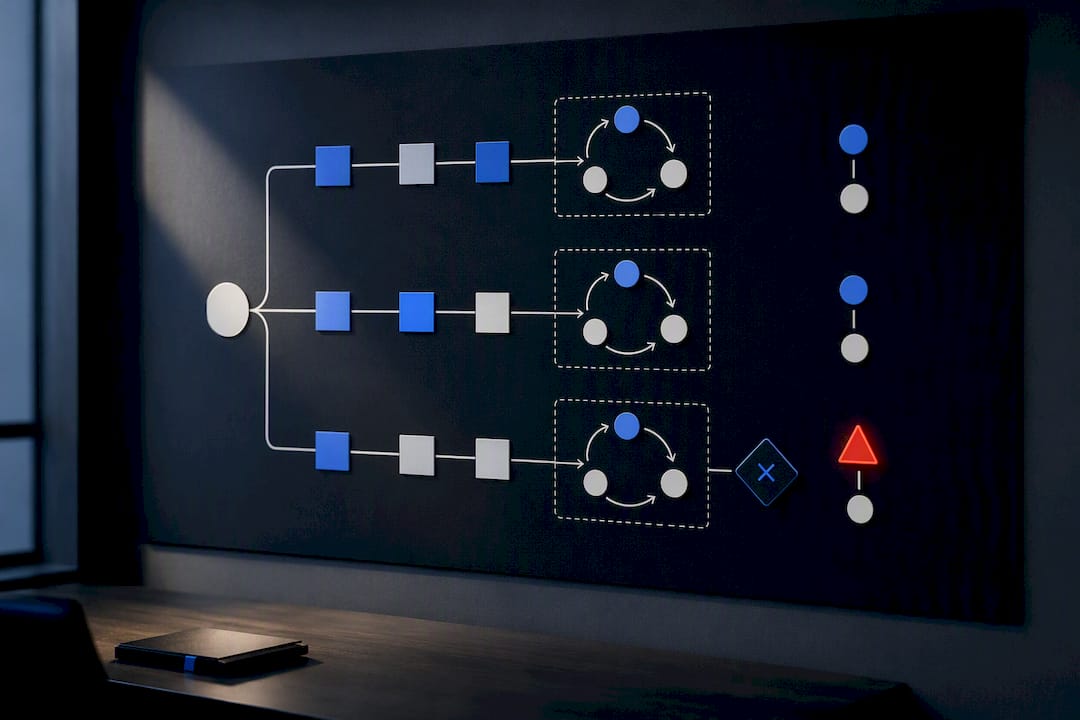
An effective approach to AI outreach relies on signal-driven targeting rather than sheer volume, with a human handling every reply rather than automation. The method leans on LinkedIn-first outreach because that's where intent signals like profile visits and post engagement show up first, before a prospect ever opens an email.
The operational case for a managed service comes down to bandwidth. Building an in-house verification waterfall, warm-up plan, and review workflow takes real time to get right, and most Series A and B teams don't have a spare month to spend on infrastructure before the first meeting gets booked. A managed model compresses that ramp because the process already exists and has been tuned against real send data.
None of this replaces judgment. A human still needs to define the ICP correctly, decide when a segment isn't converting, and read the qualitative signal in a reply that no dashboard captures. The method works when it's treated as infrastructure for better decisions, not a replacement for making them.
— Chad
How Sdr Turns Research-First Outreach Into Booked Meetings
Sdr is built around the same research-first, signal-driven sequence this article just walked through, minus the months it takes to build that infrastructure yourself. AI-Powered Outbound runs LinkedIn-first targeted outreach against your specific ICP, with a human SDR handling every reply so nothing gets automated into a dead end.
If you'd rather build the engine in-house, Sdr hands over the playbook, data sources, and review workflow so your own team runs it. Teams that also need warm-calling capacity can pair outreach with the AI-Dialer, priced at $2,400 per year with a $500 one-time onboarding fee, to add parallel dialing on top of digital touchpoints. AI-Powered Outbound runs $2,500 per month with a $500 one-time setup fee. The choice between a managed service and DIY tooling usually comes down to bandwidth: if your team can dedicate someone to owning verification, warm-up, and review for the next quarter, DIY works. If pipeline needs to start moving now, a managed engagement skips that ramp. Book a demo to see how the research-first workflow applies to your specific ICP.
Sources
For deliverability benchmarks and recovery guidance, Folderly's 2026 research on B2B SaaS outbound documents why AI-generated volume tightened provider requirements industry-wide. Saleshandy's analysis of 53 million emails sets the bounce and complaint thresholds referenced throughout this piece. For the mechanics of AI-driven lead generation and research-first sequencing, Clay's complete guide breaks down fit and intent scoring in depth. On multi-channel coordination, Babylovegrowth's piece on AI content across funnels is worth a read for teams expanding beyond a single channel.
- Fixing B2B SaaS Outbound Email Deliverability in 2026: Benchmarks, Expectations, and Recovery Across the Industry
- AI Lead Generation: The Complete Guide (2026) | Clay
- 2026 Benchmark Report (Validity)
FAQ
How Do You Use AI for Sales Outreach?
Use AI to research verified account and contact data first, then let it draft messages constrained to those confirmed facts, and always route the first message in a new sequence through human review. Skipping the research step and sending AI-drafted messages straight to prospects is the fastest way to burn domain reputation and credibility at once.
Is AI Going to Replace Sales Reps?
No, but it is changing what reps spend time on. About 70% of sales teams already use AI to write outbound email, yet the reps who rely on it least often report an easier time getting replies, which suggests AI works best as research and drafting support, not a full replacement for judgment and relationship handling.
How Much Does AI Sales Outreach Cost?
Pricing shapes vary: flat monthly platform fees, per-contact or per-credit pricing, and managed-service retainers that bundle the platform with a human team. Sdr's managed AI-Powered Outbound service runs $2,500 per month with a $500 one-time setup fee, while the standalone AI-Dialer SaaS tool runs $2,400 per year with a $500 onboarding fee.
What Is AI Sales Outreach, Exactly?
AI sales outreach uses machine learning to source prospects, research their business context, and personalize outbound messages across email, LinkedIn, and phone. The category splits into AI copilots that assist a rep, autonomous AI SDRs that run the full loop, and research-first platforms that constrain AI drafting to verified facts before anything gets sent.
What Reply Rates Should You Expect From AI Outreach?
Signal-triggered LinkedIn campaigns targeting profile visitors or post engagers see reply rates around 13 to 14%, versus a 10.3% average for generic LinkedIn outreach.